
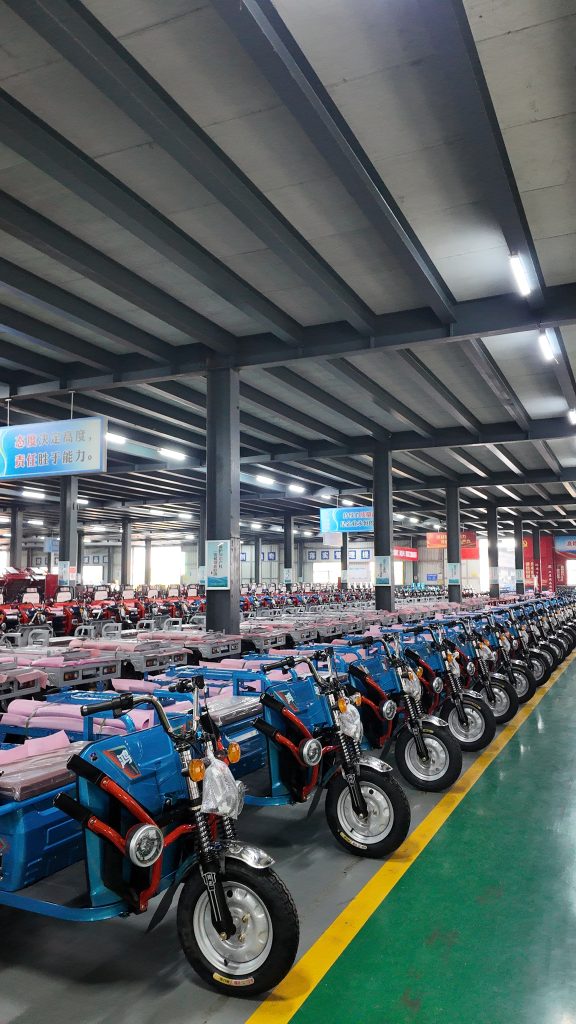
CKD, SKD and complete-vehicle supply describe different levels of disassembly and local assembly. None of the three is automatically the best choice. The correct model depends on import policy, shipping cost, local labor, quality-control capability and order volume.
What Is a Complete Vehicle?
A complete vehicle is assembled and tested by the manufacturer before shipment. It normally reduces local assembly work and makes responsibility for final assembly clearer. The tradeoff can be higher shipping volume and, in some markets, a different duty or registration treatment.
What Is SKD?
SKD means semi-knocked down. Major modules are supplied separately and assembled at the destination. The exact disassembly level must be written into the packing and assembly plan because suppliers and markets may use the term differently.
SKD can provide a practical middle ground for importers with basic assembly capability. It may improve container utilization without requiring the full production system associated with deeper CKD assembly.
What Is CKD?
CKD means completely knocked down. The vehicle is supplied as a larger set of parts and subassemblies for local assembly. CKD can support local industrial programs and more efficient packing, but it transfers more process control to the importer or local factory.
Successful CKD operation requires trained workers, fixtures and tools, assembly instructions, torque standards, electrical testing, parts control and final inspection. Saving shipping space is not useful if rework and inconsistent assembly create higher total costs.
Five Factors to Compare
1. Local Policy and Duty Treatment
Ask a qualified local customs or compliance professional how each supply format is classified. Do not select CKD or SKD only on a supplier’s general statement because tariff and local-content rules vary.
2. Assembly Capability
Evaluate facility space, workers, tools, electrical safety, test equipment and supervision. If the local operation cannot reproduce the manufacturer’s assembly and inspection process, a more complete supply format may be safer.
3. Order Volume
Small trial orders may not justify tooling, training and detailed CKD packaging. Larger repeat programs can make local assembly investment more practical.
4. Quality Responsibility
Define who is responsible for assembly defects, damaged parts, missing components and final road testing. A clear inspection record at both origin and destination prevents disputes.
5. Parts Identification and Packaging
CKD and SKD orders need numbered packages, parts lists, assembly sequence, protection against transport damage and a process for reporting shortages.
Questions to Send with an RFQ
- Which vehicle model and configuration is required?
- What disassembly level can the local factory handle?
- What are the destination customs and local-content rules?
- What tools and fixtures are already available?
- What monthly production volume is planned?
- Who will train workers and approve the first assembled unit?
- Which inspection documents and spare parts are required?
Dajiang can discuss supply format as part of a qualified project. Review the available electric vehicle models and provide the destination, quantity and assembly capability when requesting a quotation.